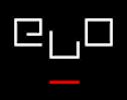
The Dazzle as Question

March 5, 2006 in Showcase

The Dazzle as Question“The Dazzle as Question,” first published in frAme, traces the conflict between the left and right brain inclinations of an erstwhile “old school” artist as experienced via an encounter with the digital realm. The Dazzle is a lyrical one; its marks and varied rhythmic emphases are indicative of the questions and confusion underlying the relationship between old and new identities and images. Claire Allan Dinsmore is a writer, artist, and the editor and designer of Cauldron & Net: a journal of the arts & new media. She has an MFA from Cranbrook Academy of Art and a BFA from Parsons School of Design/The New School for Social Research. Dinsmore has exhibited worldwide and been published as an artist, critic, essayist, and poet. See this work’s Directory entry for links to more works by this author.

MACHINE Reading Series at Kelly Writers House: Stuart Moulthrop, April 19

March 3, 2006 in ELO, Events

On Wednesday, April 19, acclaimed veteran hypertext writer Stuart Moulthrop will read from early and recent works at the University of Pennsylvania’s Kelly Writers House. Moulthrop’s appearance, part of the MACHINE reading series co-sponsnored by the ELO, will take place at Kelly Writers House at 5:30 p.m. Map and directions can be found on the Kelly Writers House website.

Viewing Axolotls

February 26, 2006 in Showcase

Viewing AxolotlsRegina Celia Pinto, a Brazilian artist and writer, is the creator of The Library of Marvels. This online library is a collection of “artist’s e.books” on the web. The library began in 1999, and now contains six volumes: White and Black, Reflections on Fog (1999), the Book of Sand (2001), The Psychiatrist, Net.art / Web.art and other stories (2002), The Newest Song of Exile: Sabiá Virtuality (2003), Viewing Axolotls (2004) and Tales from my balcony / Alice in the “wonderbalcony.” Viewing Axolotls is a multiple investigation into a Cortazar short story updated in gender and media. Please see the directory entry for more about this author.

Diagrams Series 6

February 19, 2006 in Showcase

Diagrams Series 6In Jim Rosenberg’s diagram poems a graphical notation acts as an external syntax — thereby, as Rosenberg puts it, “allowing word objects to carry interactivity deep inside the sentence.” This interactivity allows each element of the syntax to be occupied by complex clusters of words: layered, multiply embedded, and yet legible. Rosenberg’s earliest experiments with diagrammatic poems date back to 1968, and he has been creating interactive works since 1988, using a variety of platforms. Diagrams Series 6 was developed in Squeak, an environment that allows for reading on a wide variety of operating systems and also enabled Rosenberg to move (for the first time) to composing each poem in the series within the interactive reading environment. See the Directory entry on Rosenberg for more information.

Text Rain

February 12, 2006 in Showcase

Text RainText Rain is an interactive installation in which viewers play with the falling text of a poem. The text responds to motion and can be caught, lifted and released to fall again. If participants accumulate enough letters along their outstretched arms, or along the silhouette of any dark object, they can read words and phrases formed by the falling letters. With active participation the text of the poem “Talk, You” by Evan Zimroth can be gradually reconstructed. As Utterback and Achituv put it, “Zimroth’s poem creates metaphorical bridges between the physical and the linguistic. It employs images of the body moving through space to speak of interpersonal relationships, illustrating how ‘meanings’ come together and fall apart through transient ‘syntactical’ spatial relationships.”

Moving Toward the Light

February 5, 2006 in Showcase

Moving Toward the LightChristy Sheffield Sanford’s “Moving Toward the Light: A Meditation for the Solstice” is one of the remarkable pieces created by this unusual artist and poet. Known for her use of color and light, Sanford’s work often broke new ground in Web practice. This piece, created in 1997, uses sound, Java Applets, layers, motion, highlighted backgrounds, and mouseovers to explore the many moods of the Winter Solstice. Sanford is well known for her work as a trAce Writer in Residence, for her collaborative Madame de Lafayette’s Book of Hours, and for works such as “Water~Water~Water” (with Reiner Strasser), “Rockgarden of Love,” “Moon Swimming,” and “Bodies of Water: Fountain Albertas.”

Beautiful Portrait

January 29, 2006 in Showcase

Beautiful Portrait“Beautiful Portrait” is featured in a recent issue of Born Magazine. In keeping with the mission of the magazine to combine designers and writers, the poem itself is written by Thom Swiss and the Flash animation is the creation of Motomichi Nakamura. Although there is no written text, the Flash sequence is accompanied by a synthetic voice that delivers the poem as the reader explores a grid pattern of accented silhouettes. The action of the reader escalates the tone and imagery of the piece, bringing about a surprising finish. Thom Swiss, well known in critical and scholarly literature, has written new media poetry for several years — his works include “The Dream Life,” “Hey Now” (also with Motomichi Nakamura), “Shy Boy,” and “City of Bits.”

Electronic Literature Collection: Less than One Week to the Deadline

January 26, 2006 in Calls, ELO

The first volume of Electronic Literature Collection seeks submissions of work – until Tuesday, January 31. See the call for works for details!

Glazier, Carpenter, Moulthrop to Read at Penn

January 22, 2006 in ELO, Events

The MACHINE reading series at the University of Pennsylvania’s Kelly Writers House, co-sponsored by the Electronic Literature Organization, will include two programs in Spring 2006.

February 15, 5:30pm: Loss Pequeño Glazier (University of Buffalo, author of Digital Poetics: The Making of E-Poetries, numerous digital works, and Anatman, Pumpkin Seed, Algorithm) joins Penn’s own Jim Carpenter (creator of the Electronic Text Composition system) to take the Writers House to the limits of computing and poetry. The program will be hosted by poet and critic Charles Bernstein (With Strings, My Way: Speeches and Poems, Republics of Reality: 1975-1995). The February 15 “Constructing Poets” program is co-sponsored by the Penn Creative Writing Program.

Fibonacci’s Daughter

January 22, 2006 in Showcase

Fibonacci's Daughter“Fibonacci’s Daughter” by M.D. Coverley (a pen name for Marjorie C. Luesebrink), published originally in New River in 2000, is a narrative and architectural puzzle. The main character, Annabelle Thompson, is the daughter of gamblers and a new-age opportunist. She sets up shop in California’s Huntington Beach Mall, where she uses numerology and Fibonacci numbers to peddle insurance policies to high school cheerleaders and football players — insurance against failure, that is. But probability is always chance, and the mystery that lurks here can be resolved in several ways. This piece is part of a larger collection, Fingerprints on Digital Glass, Web-native Fictions. Coverley is also the author of Califia from Eastgate Systems and the recently-released The Book of Going Forth by Day. See the Directory entry for more about this work and author.

Micro-Talespin

January 15, 2006 in Showcase

Micro-TalespinJames Meehan’s Tale-Spin, created as part of his 1976 dissertation, The Metanovel: Writing Stories by Computer, was the first major project in the area of story generation. Like one of Calvino’s invisible cities, it creates an alternate landscape in which the inhabits live in a manner evocatively different from our own — with all actions the result of plans, the locations of items only learned by convincing someone to tell you, and no one feeling an emotion without knowing it. Like Aesop’s fables, Tale-Spin‘s view of human nature was communicated through the interactions of iconic animals. But unlike the worlds of Calvino or Aesop, Meehan’s world wasn’t simply described — it was made to operate. In fact, its operation, rather than its description, was Meehan’s primary work. (The text describing the world was produced by a bare-bones language generation program, called Mumble, designed primarily to fit in the small amount of memory left on the Yale AI lab’s computer system when Tale-Spin was already running.)

In 1981 a simplified version of Tale-Spin was published as part of the book Inside Computer Understanding: Five Programs Plus Miniatures. This version, Micro-Talespin, was then translated into Common Lisp (a programming language used in many artificial intelligence projects) by Warren Sack in 1992. It includes the settings for five default stories, simple text output from Micro-Mumble, and also the ability to interact with the simulated world. The ELO website now hosts Sack’s version, which requires that the computer running it have Common Lisp installed. GNU CLISP is an implementation of Common Lisp that works on Unix, MacOS, and Windows machines. To experience Micro-Talespin, start Common Lisp, load Micro-Talespin, and then, at the “?” prompt, type: (micro-talespin-demo *story1*). Next, try starting up with one of the other five stories.

Prince of Persia: The Sands of Time

January 8, 2006 in Showcase

Prince of PersiaJordan Mechner is the writer and designer of groundbreaking cinematic games such as Karateka (1984), Prince of Persia (1989), and The Last Express (1997). His most recent, in collaboration with a small team within Ubisoft’s Montreal studio led by producer Yannis Mallat, is Prince of Persia: The Sands of Time. The gameplay is based on acrobatics, spatial puzzle solving, the manipulation of time, and swordplay. This gameplay connects to the story of the Prince through the Dagger of Time, which Mechner characterizes as “at once a weapon, a receptacle, and a MacGuffin.” The story is told in past tense narration — perhaps for the first time in a video game — with a noir flavor. As one progresses through the game the situation of the narrator’s telling is slowly revealed, pointing to influences such as Thief of Baghdad and, further back, to the traditional frame tale of 1001 Nights.

Shandean Ambles

January 1, 2006 in Showcase

Shandean AmblesLaurence Sterne’s Tristram Shandy is the 18th century’s answer to Douglas Adams — irreverent, funny, and surprisingly hypertextual. Shandean Ambles (drafted at the Shandy Hall under Sterne’s imposing nose) parodies this work of nine volumes in nine short steps. Come explore indecent ghosts and sexual harrassment, quills and LCD screens, marbled papers and marble halls where the sauce and the plot never thicken.

The ELO at MLA, and 2006 Wishes

December 31, 2005 in ELO

The electronic literature meetup at the MLA convention was great fun, and a perfect first celebration of the new partnership between the Electronic Literature Organization (ELO) and the Maryland Institute for Technology in the Humanities (MITH).

We hope everyone in the electronic literature community has a great 2006 – and at the end of the next year, we hope to see many of you at the next e-lit MLA meetup, at the MLA convention in Philadelphia.

ELO and MITH Announce Partnership

December 29, 2005 in ELO

MITH logo

At today’s MLA event the Electronic Literature Organization and the Maryland Institute for Technology in the Humanities announced that we have agreed on the principles of a wide-ranging partnership. Plans in the works include research projects, conferences, and a move of the main ELO office to MITH in mid-2006 (while the UCLA ELO node will continue to organize its highly successful events). A joint press release will follow in the new year.

Password Reset

Please enter your e-mail address. You will receive a new password via e-mail.