N. Katherine Hayles Award
Judges: Dene Grigar, Davin Heckman, Alinta Krauth
Winner: Binding Media: Hybrid Print-Digital Literature from across the Americas by Elika Ortega
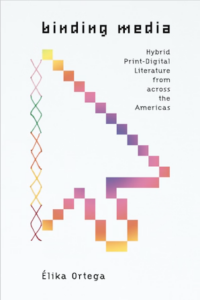
Publisher page — Stanford University Press
Judges Comments
Binding Media: Hybrid Print-Digital Literature from across the Americas by Elika Ortega helps to move the field forward with a convincing argument for the practice of drawing together “codex with an electronic or digital application to create a single literary work” (20). Many examples of this practice have long existed, from Thomas M. Disch’s Amnesia (1986) to John McDaid’s Uncle Buddy’s Phantom Funhouse (1992/3), to the more recent works, like Amaranth Borsuk and Brad Bouse’s that the author cites. This book is an excellent contribution to the field.
Runner-up: Simone Murray’s The Digital Future of English: Literary Media Studies
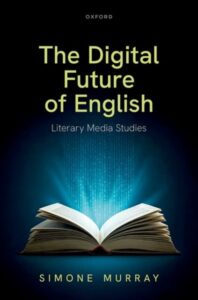
Publisher page — Oxford University Press
Simone Murray’s book, The Digital Future of English: Literary Media Studies, is a very strong contribution to the field of Literary Studies, situating a wide range of contemporary practices within its history. A key strength is her comprehensive approach of the contemporary landscape that includes media/popular culture studies, digital humanities, electronic literature, and populist approaches from outside of the academy. It also does not flinch from critiquing the pretentious projections of Literary Studies in relation to the crisis of higher education. It is a book that I plan to order for my personal library, because it does such a fantastic job of describing the relationship of electronic literature to the broader landscape of higher education, while providing a rich and nuanced understanding of the field. Its main shortcoming in relation to the award in question is, perhaps, its broader focus on English Literature (as opposed to electronic literature). It is a very important book, nevertheless. And should be recognized as a strong contender for this honor.
Hon Mention: Digital Literary Creative Practice: Six Memos for Writers in the Current Millennium, by David Thomas Henry Wright
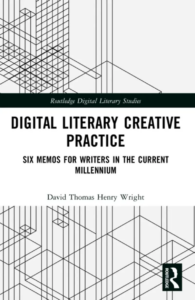
Digital Literary Creative Practice: Six Memos for Writers in the Current Millennium, by David Thomas Henry Wright shines for its demonstrated and productive engagement with the field of Electronic Literature. Using Calvino’s classic work as a springboard for speculation about literary futures and marrying those futures to great works of electronic literature, the text is productive and playful, particularly for those of us readers who have been paying attention to electronic literature across the decades. This work, which speaks explicitly to practice-led research, would find great use in a creative writing class on the medium.
Coover Award
Judges: Lyle Skains, Yagmur Vik, Jason Nelson
Winner
Flesh & Blood by Chris Joseph
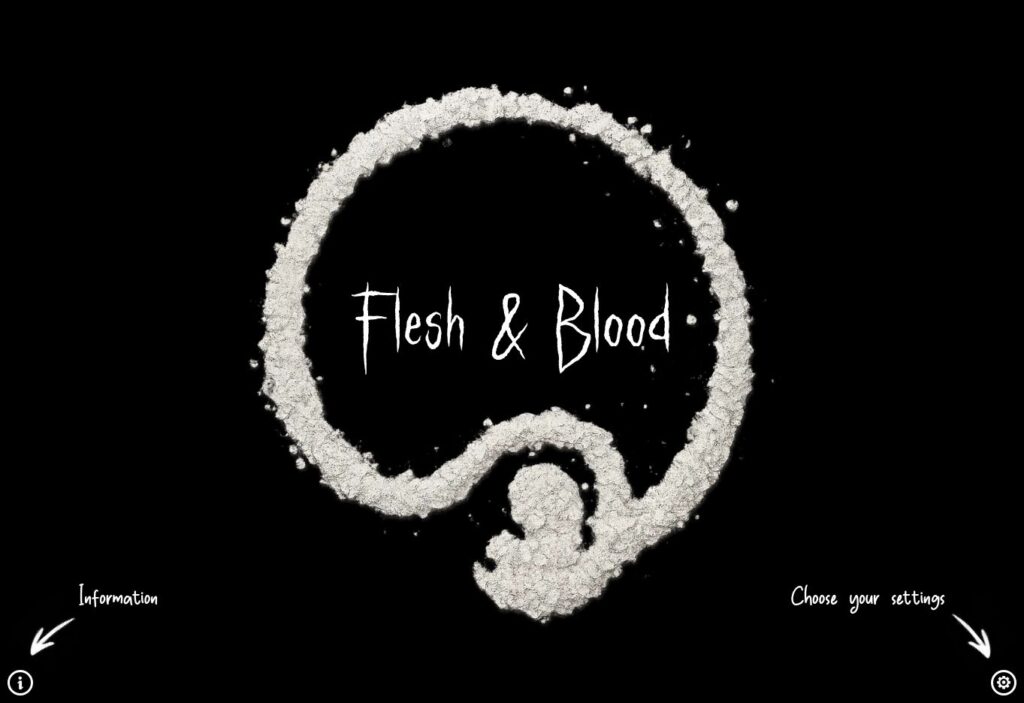
Chris Joseph’s Flesh & Blood coaxes the reader into exploring its beautiful and, at times, disturbing world. In the forest, limbs point towards the exit. In a metal crawlspace, smoke indicates which direction to follow. These details make looking closely part of the reading process. The cocoon puzzle, where the reader must locate an embryo, brings an uncomfortable intimacy. Finding a route forward means inspecting something vulnerable and enclosed. And the beautiful visuals and intricate story keep readers/players moving and reading.
The work’s puzzles carry that visual discomfort into the reader’s actions. Bodies become signposts, and an apparently hostile environment contains the clues needed to escape it. Joseph’s strongest decision is to make these images useful as well as unsettling. The reader has a reason to examine them, hesitate over them, and return to them. That attention gives the work a unique allure, and a compelling exploratory feel.
Runner Ups
A Million Random Acts by Mark Sample
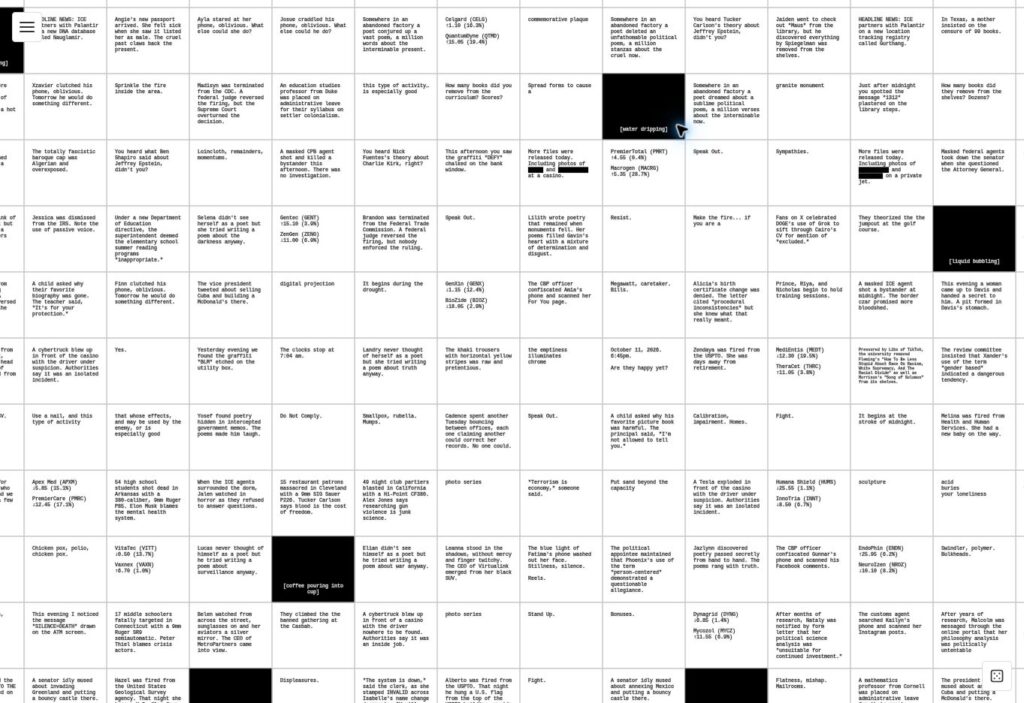
“A Million Random Acts is like a dystopian time capsule of 2025; it is chaotic and gives the audience a selection of reports, news, social media excerpts, and shows from the dark corners of last year. Although the combinations are random and appear similar to doomscrolling, the content resembles our contemporary fears, political contingency, and overall confusion. A mirror to the world… with a negative aesthetic twist.”
UVB-76: A Poetic Artifact by Pau Rodriguez (Pau i au)
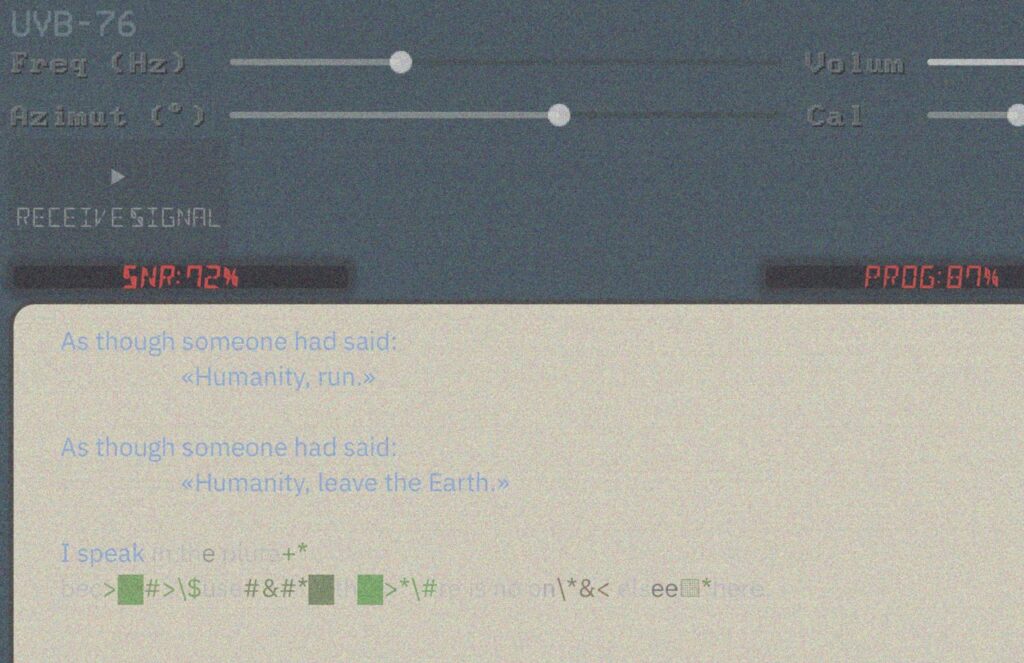
Pau i au’s UVB-76 places poetry inside a radio interface, making communication feel uncertain and mysterious. These instruments suggest that a message can be recovered through careful adjustment, yet the writing beneath them is partly broken into symbols, coloured blocks and faint letters. The phrases that remain readable are unsettling: “Humanity, run” and “Humanity, leave the Earth.” Their introduction, “As though someone had said,” leaves the speaker’s existence in doubt. Is this a warning, an imagined voice, or meaning extracted from interference?
The contrast between precise controls and damaged language offers measurements without the reassurance of understanding. The reader encounters the hope that someone is transmitting, alongside the difficulty of knowing whether anything received amounts to contact. That uncertainty makes its loneliness feel concrete.
Hon Mentions
One Lonely World by Vegard Fotland
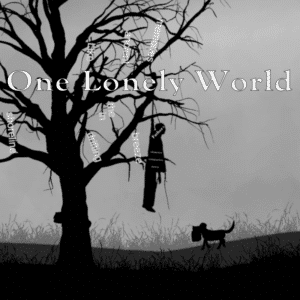
Vegard Fotland’s One Lonely World approaches the end of humanity through a dog searching a ruined world. This simple premise gives the ruined world a resonant sadness. And playing as the dog makes human absence a problem of attachment and care, as well as survival.
What makes Fotland’s work so compelling are the stunning visuals, a mix of poetic language integrated into the landscape, disturbing imagery of loss and danger, but also a powerful beauty. Each new area or level kept us reading and exploring. The level of detail and attention that went into crafting this work is obvious. We are excited to see future works Fotland will make!
Dioxin Field by Collier Nogues
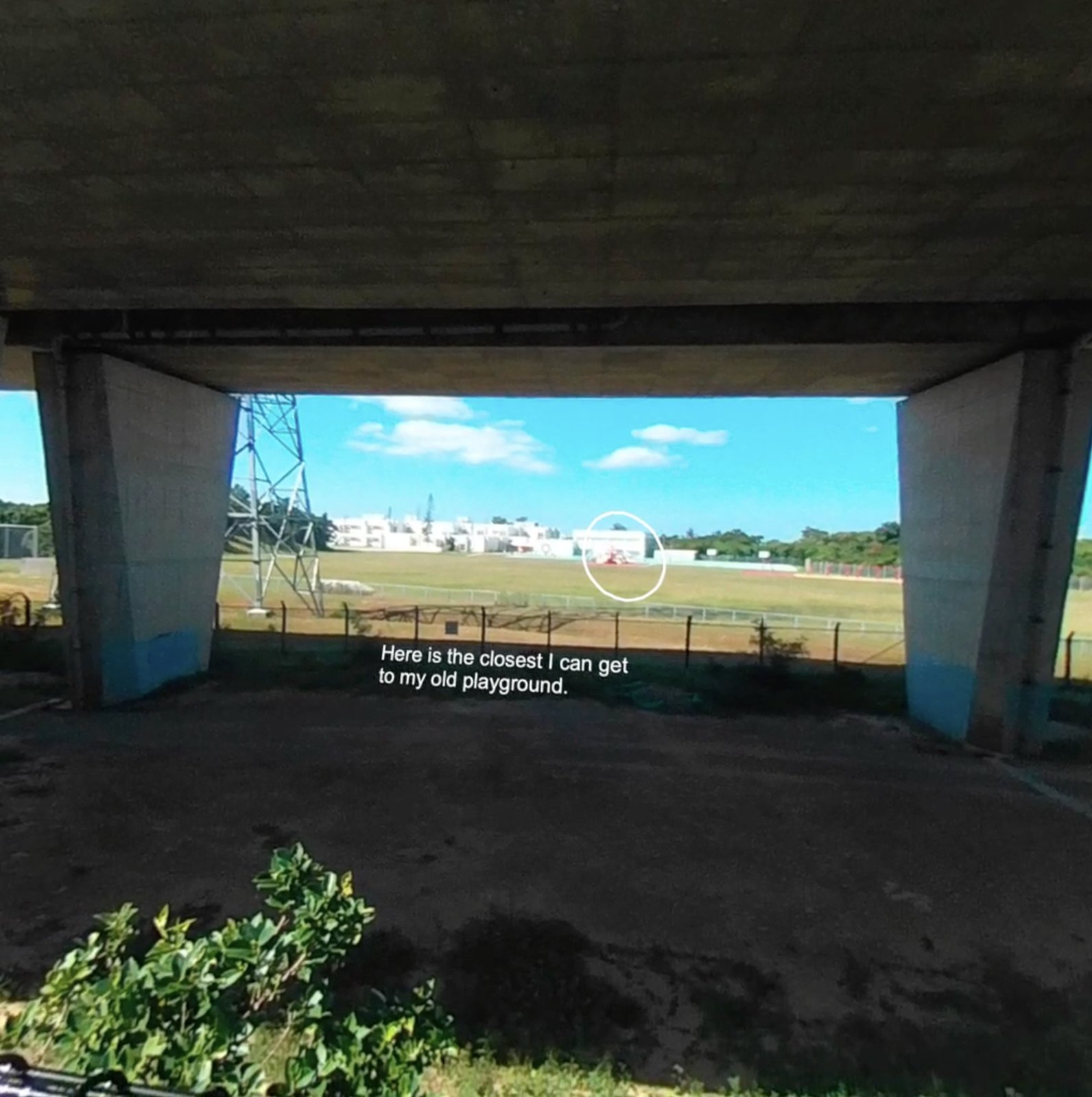
“Dioxin Field feels like the old picture books my grandpa held accompanied by his stories: warm, nostalgic, and partly melancholic. The work combines VR experience and navigation through the 360-degree, panoramic imagery of Street View aesthetic: utilising physical maps to create maps for the memories. Nogues’ work lingers between loss of childhood and local constructional development, relying on personal memory and archival bookkeeping to create a story of a piece of their childhood. Simplistic and powerful, an absolute millennial haven.”
WWW.AFOA.NZ / A Flight Over Aotearoa New Zealand by Gisela de Castro
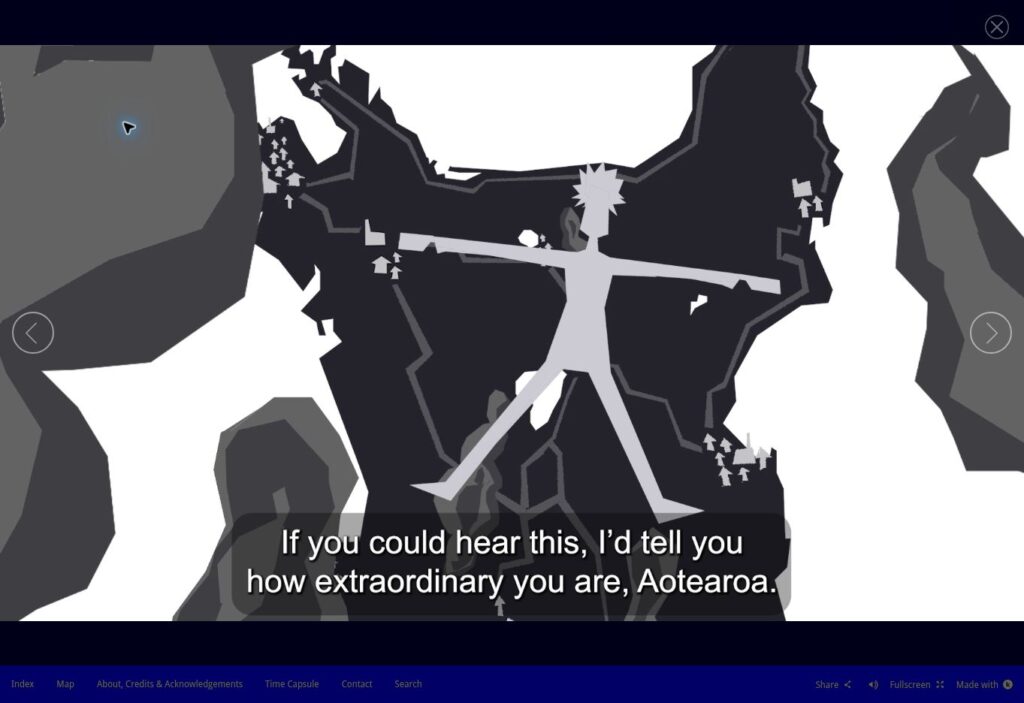
Open A Flight Over Aotearoa New Zealand
“New Zealand is a bridge between present and future from a child’s perspective. It brings so many voices and owns a window to a mundane world where imagination, excitement, and honesty exist in a way only children carry. The letters are beautifully written, visuals are matched to those letters with wit. de Castro combines colorful imagery similar to children’s drawings with animation-esque sounds, teleporting the viewer into a conversation with each child. The amount of communal work is not only impressive but also engaging for the viewer. ”
Maverick
Judges: Jason Nelson and Alinta Krauth
Jim Andrews
Jim Andrews gives language things to do. It can sing, scatter, collide, change its mind halfway through a sentence. A poem can become an instrument, and reading can involve your hands, your ears, and the small disaster of moving your mouse somewhere unexpected.
Since launching vispo.com in 1996, Jim has built a practice where poetry, programming, visual art and sound continually get into each other’s machinery. In Stir Fry Texts, moving across the writing replaces portions of one text with another. The paragraph rearranges itself around your interference. You are reading and disturbing the poem at the same time, making connections that neither source text could make alone.
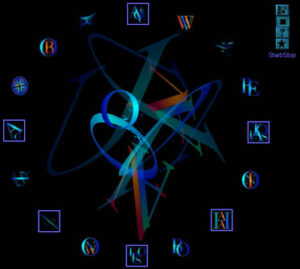
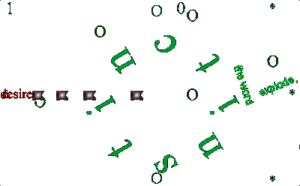
In Nio, vocal loops and animated letterforms become materials you can layer and sequence. Language has rhythm, shape and breath before it settles into a message. Then there is Arteroids, where poetry enters the arcade and gets shot into sprays of letters. Its explosions sound through recordings of Jim’s own voice. Even the destruction has a human mouth behind it.
These works ask us to reconsider what counts as writing, and what a reader might be allowed to do. Jim builds the software that makes those questions playable. He also explains his experiments, shares code, collaborates, and returns to older works so they can continue living on changing machines.
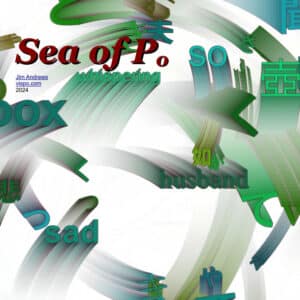
That invitation continues in Sea of Po, a multilingual poetry magazine that also lets readers animate and save their own texts. Publishing becomes another occasion for making.
The Maverick Award recognises an independent path, and Jim’s path has produced an extraordinary collection of tools, encounters and unruly possibilities. His contribution is there in the works themselves, and in the permission they give the rest of us. Take language apart, listen to its pieces, build something strange, and let someone else put their hands on and inside and around it.
Works mentioned in the Maverick statement
Stir Fry Texts
Nio
Arteroids
Sea of Po
Luesebrink Winner
Joe Tabbi
The description of the Marjorie C. Luesebrink Career Achievement Award states that it seeks to “hono[r] a visionary artist and/or scholar who has brought excellence to the field of electronic literature and has inspired others to help create and build the field.” For this and so many other reasons, we have chosen as this year’s recipient, Professor Joseph Paul Tabbi.
Joe has spent more than three decades building the intellectual and infrastructural foundations upon which the field of electronic literature now stands. As founding Editor-in-Chief of electronic book review—one of the oldest online academic journals, launched in 1995 and sustained in continuous publication for thirty years—Joe was integral in creating what colleagues describe as an essential hub for cutting-edge critical discourse, one that emerged well before terms like “open access” or “digital humanities” had entered common use. As one nominator put it, “Joe did not follow the field; he built the terrain on which it could emerge.” That same spirit of foundational leadership carried through his service as President of the Electronic Literature Organization (from 2007–2010), his long tenure on its board, his revitalization of the Electronic Literature Directory, and his founding role in the Consortium on Electronic Literature (CELL).
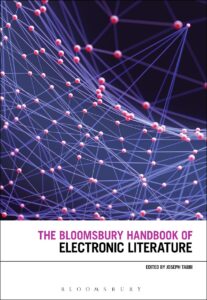
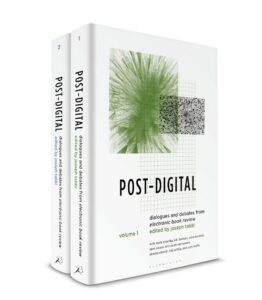
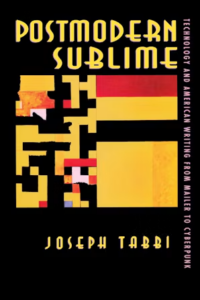
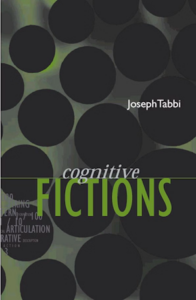
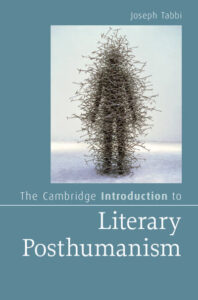
Beyond infrastructure, Joe’s scholarship has shaped how the field understands itself. His editorial vision produced the Bloomsbury Handbook of Electronic Literature (2017)—winner of the ELO’s N. Katherine Hayles Award for Criticism of Electronic Literature—and its companion volume, Post-Digital: Dialogues and Debates from electronic book review (2020), together forming what one nominator called “the most authoritative scholarly infrastructure the field of electronic literature possesses.” His authored works, including Postmodern Sublime, Cognitive Fictions, and most recently, the Cambridge Introduction to Literary Posthumanism, further demonstrate a career devoted equally to critical rigor and to the communities that sustain it. As one colleague of thirty years reflected, “no single individual has done more to build the intellectual and infrastructural foundations of electronic literature as a field.”
Above all, Joe is well known for his generosity as a mentor and community builder—supporting early-career scholars through the ELO Fellows program, connecting artists and academics across national and institutional lines, and inspiring the careers of countless practitioners who now carry the field forward. A nominator wrote that, “Without his talent, attention, and care for both academic excellence and community building, neither ELO nor electronic literature would have been where they are today.” For these reasons, Joe is an exemplary recipient of the Marjorie C. Luesebrink Career Achievement Award.
Books mentioned in the Luesebrink statement
The Bloomsbury Handbook of Electronic Literature
Post-Digital
Postmodern Sublime
Cognitive Fictions
University of Minnesota Press page
The Cambridge Introduction to Literary Posthumanism
Publisher page — Cambridge University Press